
Beware the Four Ego Monsters: Leadership Traps That Sabotage Teams
- David Frandsen
- Nov 10, 2025
- 4 min read
No matter how experienced or motivated a leader may be, ego has a way of sneaking in and undermining our best intentions. In a previous article, I explored the toxic impact ego can have on organizations. But ego doesn’t show up as self-congratulation or bluster alone—often, it creeps in as everyday leadership habits we convince ourselves are necessary or even virtuous. Over time, these habits morph into patterns that drain trust, dull motivation, and choke out the best in our teams.
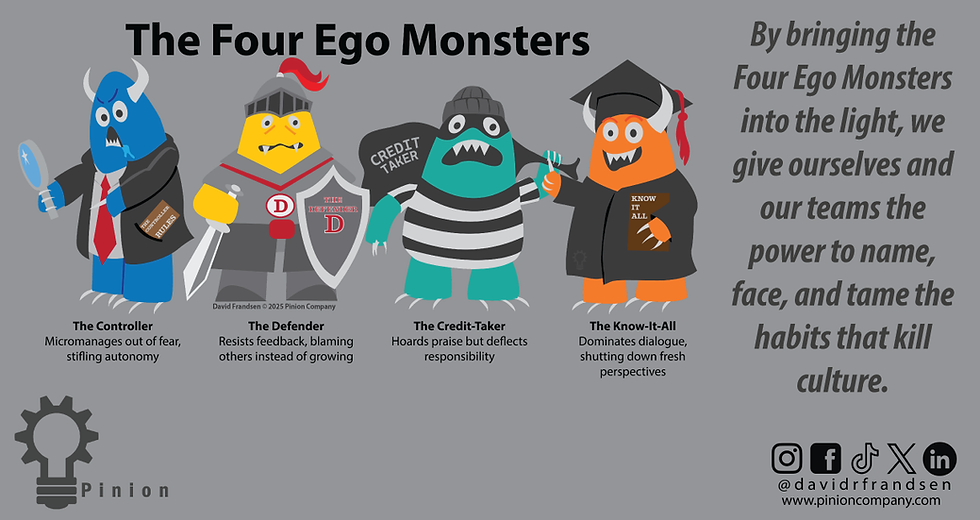
To help leaders recognize ego’s subtle grip, I created the Four Ego Monsters: personified patterns of leadership behavior that sabotage teams from within. By naming and illustrating these monsters, we expose ego’s tricks and equip ourselves to lead with greater humility and purpose.
My Own Ego Monsters
I’d be the first to admit I’ve made all four of these mistakes at different times in my leadership journey. There have been moments when, out of fear or pressure, I’ve clutched too tightly to control, slipped into defensiveness, lifted myself up with undeserved credit, or drowned out other voices in the room. Sometimes, I caught myself; sometimes, others had to point it out—a humbling but invaluable gift. I’ve also been on the other side, feeling the weight of these monsters from leaders above me. It’s never fun. In those moments, trust breaks down, motivation wanes, and it gets harder to bring my best or feel safe enough to contribute.
Recognizing how these monsters impact us—whether we’re the leader or part of the team—makes it clear that taming our own ego is a journey, not a single victory. Progress comes from reflection, honest feedback, and a willingness to change, step by step.
Meet the Four Ego Monsters
The Controller
The Controller monster is always on guard, clutching a magnifying glass and pointing a finger as if daring you to challenge their authority. Driven by a deep fear of things going wrong, this monster micromanages every detail. Their intentions might begin with the desire for excellence, but the result is a stifling atmosphere where team members are hesitant to act without approval. Creativity and initiative wither, team members disengage, and burnout rises. In the Controller’s presence, autonomy never stands a chance.
The Defender
Wearing shining armor and gripping a heavy shield and sword, the Defender monster resists accountability. Quick to explain away feedback, always defending their decisions, they block the flow of honest dialogue. Their armor may look noble, but beneath it lies a resistance to growth. When the Defender leads, blame travels outward and learning grinds to a halt. Teams soon realize that real improvement isn’t possible in a culture where criticism is weaponized.
The Credit-Taker
Draped in the stripes and beanie of a classic thief, the Credit-Taker monster lurks in meetings and project wrap-ups, scooping up praise and applause but vanishing when accountability is needed. This monster’s greatest skill is hoarding recognition for themselves even when it was earned by others. The damage is subtle but lasting—collaboration unravels, bitterness grows, and trust erodes, making it harder and harder to rally a team for future challenges.
The Know-It-All
Wearing a cap and gown and hugging a book labeled “Know It All,” this monster dominates conversations. Their need to be right outweighs their willingness to listen and learn. They stifle new ideas, silence dissenting voices, and slowly turn team brainstorming into a one-way lecture. When Know-It-Alls are in the driver’s seat, innovation screeches to a halt and the most valuable perspectives never see daylight.
Why These Monsters Matter
Left unchecked, the Four Ego Monsters turn strong leadership into a source of frustration and fear. Each monster, in its own way, disrupts the “light” of trust, growth, and engagement that marks great teams. The Controller smothers autonomy, the Defender blocks learning, the Credit-Taker poisons recognition, and the Know-It-All shuts down diverse thinking. Over time, these monsters undo months or years of positive culture building in just a few moments or decisions.
But recognizing these monsters isn’t cause for shame—it’s a call to self-awareness. Every leader battles ego in some form. Naming these monsters makes it possible to tame them, to ask for feedback, and to hold ourselves accountable to better patterns.
Taming the Monsters: Practical Steps for Leaders
Ask for Feedback: Regularly invite your team to identify which “monster” they encounter most often—including from you.
Practice Restraint: When tempted to micromanage, pause and coach instead of commanding.
Show Gratitude for Criticism: When you feel defensive, thank people for their honesty and examine what you can change.
Share the Spotlight: Deliberately recognize team wins publicly—even (especially) when your impulse is to take personal credit.
Create Open Spaces: Encourage discussion and dissent, making it safe to disagree or offer new ideas.
Great leaders aren’t those who have banished their ego monsters forever; they’re the ones who recognize when the monsters appear and choose humility and self-improvement over comfort and pride. By bringing the Four Ego Monsters into the light, we give ourselves and our teams the power to name, face, and tame the habits that kill culture. In doing so, we build places of trust, growth, and true collaboration—where everyone can shine.


Comments